
Empowering Refugees @ McGill
With only 7% of refugees worldwide able to access higher education, there is a pressing need for universities to step up when it comes to expanding refugees’ access to and success in higher education.
Prompted by the importance of improving access to quality higher education for refugees and seeking to build on current programming and research at McGill, a new intra-university initiative was formed in 2023. Spearheaded by McGill’s Department of Integrated Studies in Education with the support of the student-run McGill chapter of World University Services Canada (WUSC) and McGill Refugee Research Group (MRRG), Empowering Refugees @ McGill aims to:
(1) Create a shared space for everyone in the McGill community who shares a commitment to empowering refugees in and through higher education.
(2) Serve as a platform for greater collaboration on refugee higher education advocacy, learning, and research at McGill and beyond.
(3) Secure increased financial support and commitment to other activities supporting refugees at/by McGill.
Advancing Access to Higher Education for Refugees, November 2025
At our Fall 2025 event, we took up global and local perspectives on access to higher education for refugees. Thanks to the panellists, we:
Explored the global research landscape for refugees in higher education with Dr Emma Harden-Wolfson and Miah Dionne Sears
Learned about how the De Mello Chair initiative and Global Academic Interdisciplinary Network (GAIN) are expanding higher education access in Brazil and internationally with Professor Dr Liliana Lyra Jubilut
Discovered how students are advocating for refugees' right to higher education at McGill with Lana Bedkache of the WUSC Executive
Heard firsthand from Mohammad Alnatour, a McGill student and former Student Refugee Program scholar, about his life as a refugee and journey to McGill
Watch the recording: https://tinyurl.com/RefugeeAccessHE
Please join the MRRG mailing list to receive information about our upcoming events.
Capping Canadian Opportunity? The Impact of Immigration Policy Changes on Refugees, November 2024
For the first time in its history, Canada is imposing caps on immigration numbers, affecting refugees, students, temporary workers and permanent residency applicants. Over 50 participants joined an insightful and critical panel discussion in November 2024 on how these policy changes could impact refugees and what the future may hold in this new policy landscape.
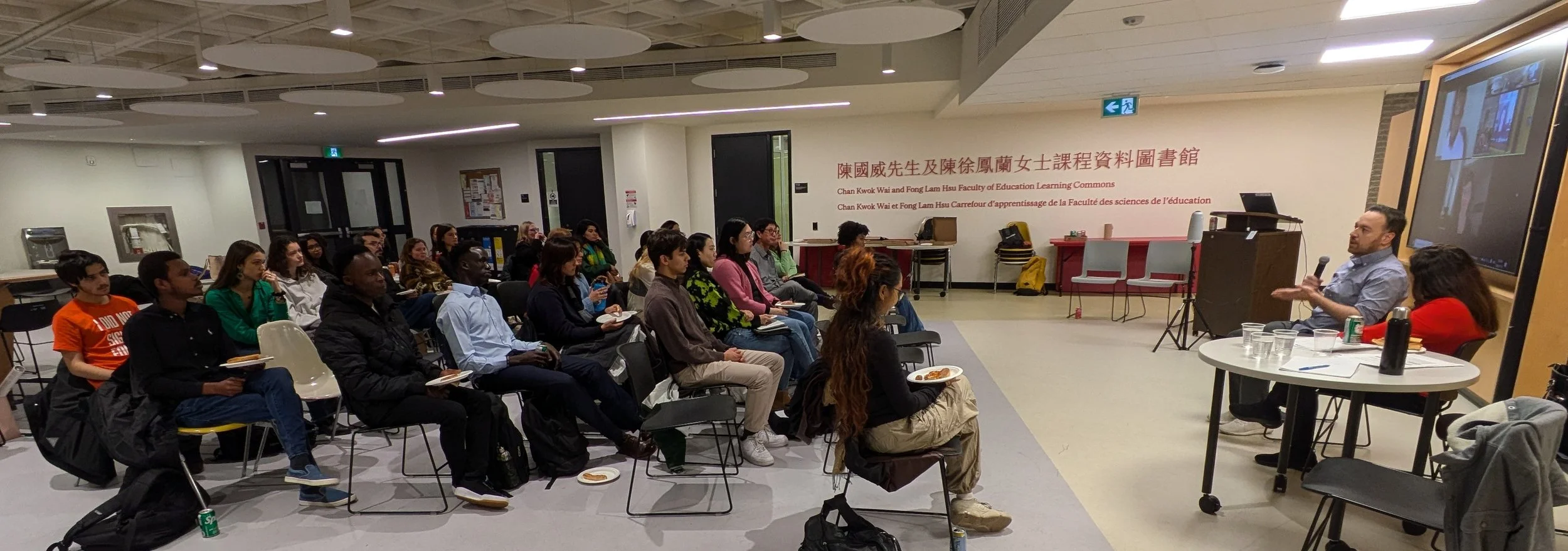
Speakers:
Mr Abdulla Daoud, Executive Director, The Refugee Centre, Montréal
Mr Robert Ishimwe, former WUSC scholar and employee at Immigration, Refugees and Citizenship Canada
Dr Arianne Maraj, Postdoctoral fellow, OISE, University of Toronto
Dr Mireille Paquet, Associate Professor, Political Science and Concordia University Research Chair on the Politics of Immigration, Concordia University
Watch the recording: https://tinyurl.com/CappingCanadianOpportunity
Awareness-raising workshop, March 2024
Kickstarting the initiative, an extremely well attended awareness raising workshop was held in March 2024. This hybrid event brought together McGill students, faculty, and staff, as well as colleagues from other organizations.
Featuring a presentation by UNHCR and sharing of a WUSC-supported refugee student’s personal journey to McGill, the event galvanized the community to identify current challenges for refugee students and set out concrete ideas for future action.
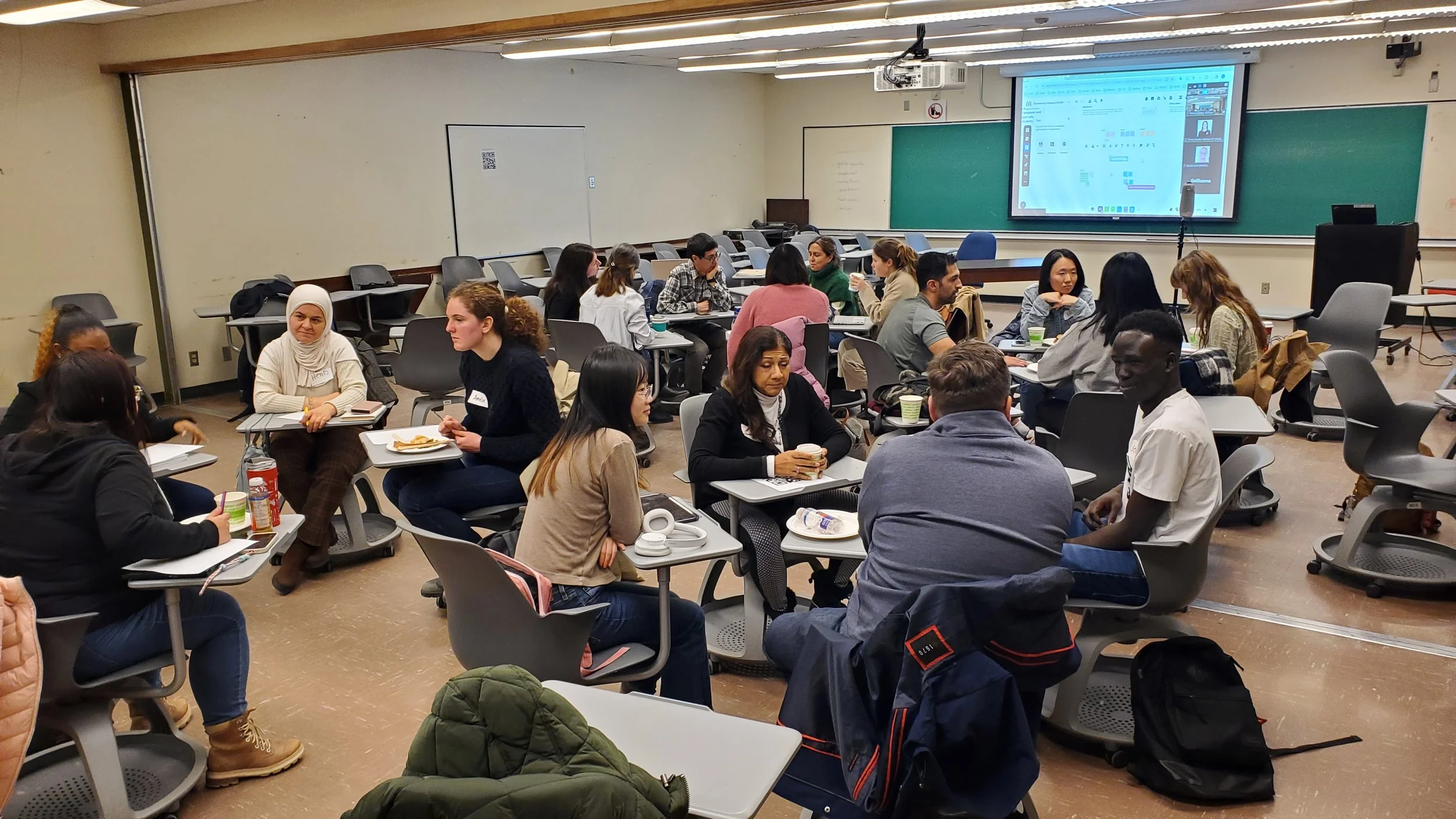
In person and online participants at the inaugural event for Empowering Refugees @ McGill, March 2024
The challenges and next steps can be categorized into six broad areas:
(1) Funding – finding ways to alleviate the financial stress on refugee students at McGill is a key priority. Suggestions included:
· Fundraising by the university to support more scholarships for refugee students.
· Creating a faculty contribution scheme to mirror the student levy for WUSC.
· Providing more on campus jobs for refugee students.
· Helping refugee students find accommodation during vacation periods.
· Committing McGill to a pledge to the UNHCR 15% by 2030 Global Pledge – to expand access to higher education and self-reliance for refugee and host community youth to at least 15% by 2030.
(2) Language – refugee students may need additional support with both English and French, and finding time for this amidst a busy workload is challenging.
(3) Mental health – there needs to be better understanding of trauma and culturally sensitive support for students and training for faculty and staff.
(4) Inclusion – the university can do more to foster an inclusive environment in general and specifically through curriculum and pedagogy. WUSC is already addressing the lack of gender parity between male and female scholarship applicants.
(5) Institutional – there need to be more processes in place to support refugee students at McGill that also account for differential educational backgrounds. McGill can promote community building and awareness raising. An important suggestion is for the university to support refugee higher education beyond our campus, targeting those in refugee camps, for example.
(6) Partnerships and communication – there are various organizations with whom McGill could partner, ranging from MIFI to local schools/CEGEPs and international organizations supporting refugee higher education. McGill can do more to tap into these resources to collectively provide support for refugees.
To explore the results of the collective work in detail, visit: https://tinyurl.com/mcgill-refugees.
For more information about Empowering Refugees @ McGill
Please contact Dr Emma Harden-Wolfson, Department of Integrated Studies in Education, emma.harden-wolfson@mcgill.ca
Last updated: November 2025